

Nutrition and Skin Health: What's the Connection?
La peau est un organe complexe qui assure notamment une fonction de barrière entre notre organisme et son environnement. Comme l’ensemble de nos tissus, son fonctionnement dépend de nombreux facteurs : génétique, âge, hormones, exposition au soleil, tabac, sommeil, environnement, soins cutanés… mais aussi alimentation.
Les nutriments apportés par l’alimentation participent notamment au renouvellement cellulaire, au maintien de la barrière cutanée et à la synthèse de certaines structures de la peau. Cela ne signifie pas pour autant qu’un aliment ou un régime particulier permette, à lui seul, de prévenir ou de traiter un problème de peau.
La recherche s’intéresse de plus en plus aux liens entre alimentation, vieillissement cutané, acné ou encore microbiote. Les résultats sont intéressants, mais leur niveau de preuve varie fortement selon les sujets.
Quels nutriments sont importants pour la peau ?
Une alimentation variée fournit les protéines, les acides gras, les vitamines et les minéraux dont l’organisme a besoin pour assurer le renouvellement et le fonctionnement normal de la peau.
Les fruits et légumes et leurs antioxydants
La vitamine C, la vitamine E, les caroténoïdes et différents polyphénols interviennent notamment dans les mécanismes de protection des cellules contre le stress oxydatif.
Plutôt que de rechercher un aliment « miracle », l’objectif est surtout de varier les sources végétales :
- fruits et légumes de différentes couleurs ;
- fruits rouges ;
- agrumes et kiwis ;
- légumes verts ;
- tomates et poivrons ;
- légumineuses ;
- noix et graines ;
- cacao peu sucré ;
- thé.
Les recherches sur le vieillissement cutané suggèrent que certains composés alimentaires, notamment les polyphénols, les caroténoïdes et certains acides gras, peuvent influencer différents paramètres de la peau. Ces résultats restent cependant dépendants des aliments, des doses et des populations étudiées.
Les bonnes graisses ont-elles un rôle pour la peau ?
Les lipides participent à la structure des membranes cellulaires et de la barrière cutanée.
Les acides gras essentiels doivent être apportés par l’alimentation. Parmi les sources intéressantes, on trouve notamment :
- les poissons gras comme les sardines, maquereaux ou saumons ;
- les noix ;
- les graines de lin ou de chia ;
- certaines huiles végétales comme l’huile de noix, de colza ou de lin ;
- l’huile d’olive.
Les données disponibles suggèrent également un lien entre certains acides gras et différents paramètres de la peau, notamment son élasticité et sa fonction barrière. Cela ne justifie cependant pas de rechercher un rapport précis entre oméga-3 et oméga-6 ou de supprimer certaines familles d’aliments sans indication particulière.
Protéines et collagène : quel rapport avec la peau ?
Le collagène, l’élastine et la kératine sont des protéines importantes de la peau. Un apport protéique suffisant fait donc partie d’une alimentation équilibrée.
Les protéines peuvent provenir aussi bien de sources animales que végétales :
- poissons ;
- œufs ;
- produits laitiers ;
- viande ;
- tofu et autres produits à base de soja ;
- légumineuses ;
- céréales ;
- fruits à coque.
La vitamine C participe par ailleurs à la synthèse normale du collagène.
Faut-il prendre du collagène en complément alimentaire ?
Les compléments à base de peptides de collagène ont beaucoup gagné en popularité ces dernières années. Plusieurs essais cliniques et synthèses de la littérature observent des améliorations de certains paramètres, notamment l’hydratation ou l’apparence des rides.
Les résultats ne permettent cependant pas de considérer le collagène comme indispensable à la santé de la peau ni de recommander systématiquement une supplémentation.
Le choix d’un complément doit également tenir compte de l’alimentation, des besoins individuels, des éventuelles carences et de l’état de santé général.
Boire davantage d’eau améliore-t-il vraiment la peau ?
Une hydratation suffisante est évidemment indispensable au fonctionnement normal de l’organisme.
En revanche, boire beaucoup plus d’eau que ses besoins ne signifie pas nécessairement que la peau sera davantage hydratée ou que les rides diminueront.
Les quelques études disponibles suggèrent qu’une augmentation des apports en eau peut légèrement améliorer certains paramètres d’hydratation cutanée, notamment chez les personnes qui buvaient initialement peu. Les preuves restent toutefois limitées.
L’objectif est donc avant tout de couvrir ses besoins hydriques habituels plutôt que de rechercher une quantité d’eau spécifique pour améliorer l’apparence de la peau.
Alimentation et acné : existe-t-il un lien ?
C’est probablement l’un des domaines dans lesquels le lien entre nutrition et dermatologie est aujourd’hui le plus étudié.
Certaines études suggèrent qu’une alimentation comportant une charge glycémique élevée — avec une consommation importante de produits très sucrés ou de glucides raffinés — pourrait être associée à une acné plus importante chez certaines personnes.
Des essais portant sur des alimentations à faible charge glycémique ont également observé une amélioration de l’acné chez certains participants.
Concernant les produits laitiers, les résultats sont plus difficiles à interpréter. Plusieurs études observationnelles ont retrouvé une association entre consommation de lait de vache et acné, notamment avec le lait écrémé. Cela ne permet cependant pas d’affirmer que le lait provoque l’acné chez une personne donnée.
L’American Academy of Dermatology souligne d’ailleurs que les données sont encore insuffisantes pour recommander des exclusions alimentaires systématiques.
Il peut être intéressant d’observer individuellement l’évolution de la peau en fonction de l’alimentation, sans supprimer arbitrairement plusieurs groupes d’aliments.
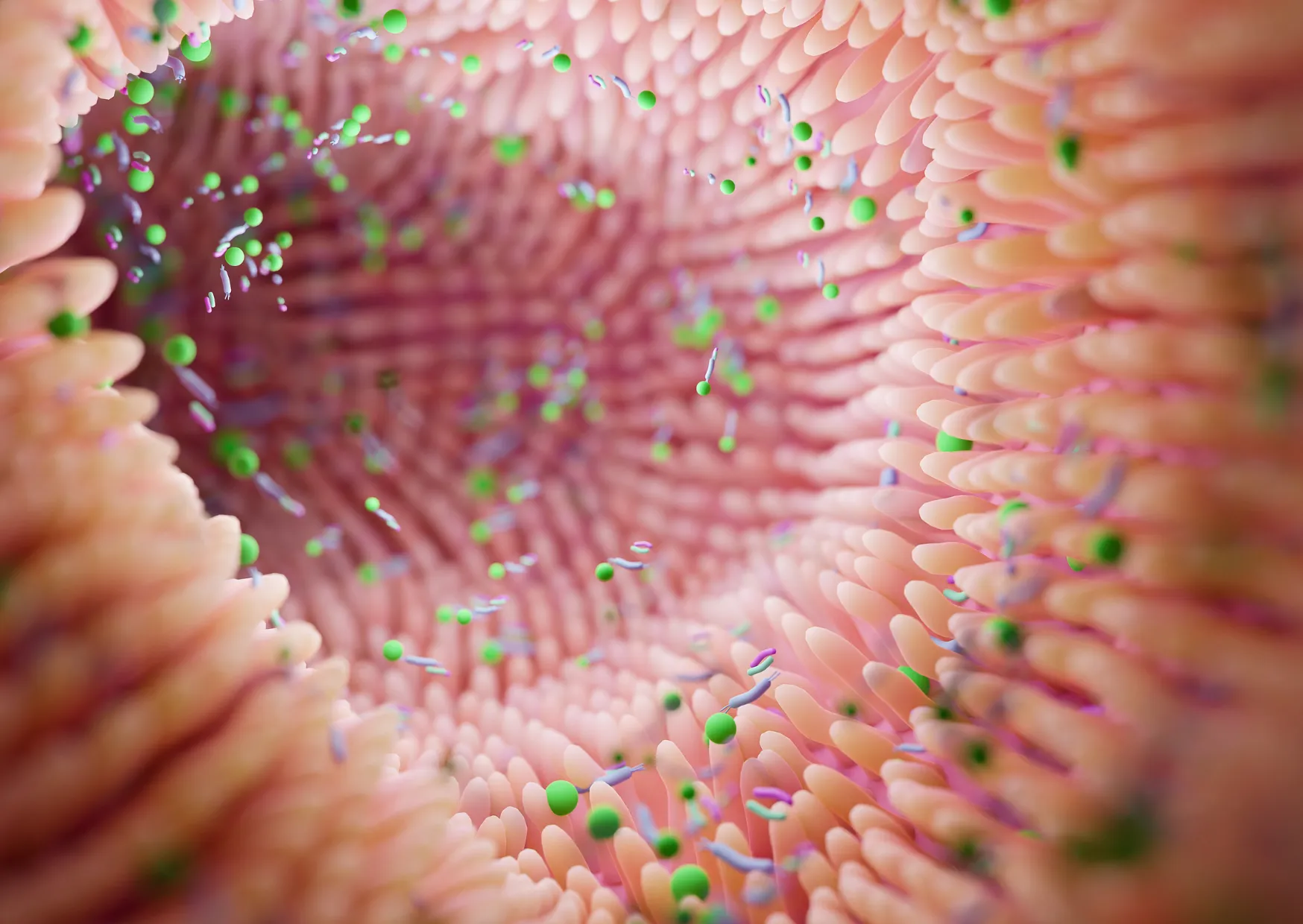
Le microbiote intestinal peut-il influencer la peau ?
La recherche s’intéresse également à ce que l’on appelle parfois « l’axe intestin-peau ».
Le microbiote intestinal interagit avec le système immunitaire et avec de nombreux mécanismes métaboliques. Des associations entre certaines altérations du microbiote intestinal et différentes pathologies cutanées ont été étudiées.
Pour autant, il est encore trop tôt pour en déduire qu’il suffit de « restaurer son microbiote » pour traiter un problème de peau.
Une alimentation riche en végétaux variés et en fibres reste intéressante pour la santé digestive et participe à la diversité du microbiote intestinal.
→ À lire également : Comment restaurer son microbiote intestinal ?
Faut-il supprimer le gluten ou les produits laitiers pour avoir une meilleure peau ?
Pas systématiquement.
Les exclusions alimentaires peuvent être nécessaires dans certaines situations médicales — par exemple en cas d’allergie diagnostiquée, de maladie cœliaque ou dans certains contextes précis évalués par un professionnel de santé.
En dehors de ces situations, supprimer le gluten, le lait ou plusieurs catégories d’aliments dans l’espoir d’améliorer la peau n’est pas systématiquement justifié et peut compliquer inutilement l’alimentation.
Dans l’eczéma notamment, les recommandations médicales ne préconisent pas d’éviction alimentaire systématique en l’absence d’allergie identifiée ou suspectée.
Quelles vitamines et quels minéraux interviennent dans la santé de la peau ?
De nombreux micronutriments participent au fonctionnement normal des tissus cutanés, parmi lesquels :
- la vitamine C, impliquée dans la synthèse du collagène ;
- la vitamine A, qui intervient dans la différenciation cellulaire ;
- la vitamine E, qui participe à la protection des cellules contre le stress oxydatif ;
- le zinc, impliqué dans de nombreuses fonctions cellulaires et immunitaires ;
- le cuivre, qui participe notamment au maintien normal des tissus conjonctifs ;
- le sélénium, qui contribue à la protection des cellules contre le stress oxydatif.
Une alimentation variée permet généralement d’apporter ces nutriments.
Une supplémentation n’est pas systématiquement nécessaire et certaines vitamines ou certains minéraux peuvent présenter des risques lorsqu’ils sont consommés en quantité excessive. Lorsqu’une carence est suspectée, il est préférable de l’évaluer avec un professionnel de santé.
Et le soleil ?
L’exposition aux rayons ultraviolets est l’un des principaux facteurs environnementaux du vieillissement prématuré de la peau et augmente également le risque de cancers cutanés.
La vitamine D peut effectivement être synthétisée au niveau de la peau sous l’effet des UVB, mais cela ne justifie pas de recommander une exposition solaire sans protection.
Les besoins éventuels en vitamine D et l’intérêt d’une supplémentation doivent être considérés séparément de la protection de la peau contre les UV.
Que retenir sur l’alimentation et la peau ?
Il n’existe pas de régime universel permettant d’obtenir une « peau parfaite ».
En revanche, une alimentation variée, comprenant suffisamment de végétaux, de protéines, de bonnes sources de lipides et couvrant les besoins en micronutriments contribue au fonctionnement normal de la peau comme à celui du reste de l’organisme.
Lorsque des problèmes cutanés sont récurrents, une consultation nutritionnelle peut également permettre d’étudier l’alimentation dans son ensemble : habitudes quotidiennes, éventuelles restrictions, apports nutritionnels, symptômes digestifs associés ou suspicion de carence.
L’objectif n’est pas nécessairement de supprimer des aliments, mais de déterminer si certains ajustements sont pertinents pour la personne concernée.
Quand consulter un médecin ou un dermatologue ?
Une alimentation adaptée peut accompagner la santé générale et cutanée, mais elle ne remplace pas le diagnostic ou le traitement d’une maladie de peau.
Il est notamment recommandé de consulter en cas :
- d’acné importante, douloureuse ou laissant des cicatrices ;
- d’eczéma étendu ou persistant ;
- de démangeaisons importantes ;
- d’apparition ou de modification d’un grain de beauté ou d’une lésion cutanée ;
- de symptômes qui persistent malgré les mesures habituelles ;
- ou de toute modification cutanée inhabituelle ou préoccupante.
Un dermatologue pourra rechercher la cause du problème et proposer, lorsque cela est nécessaire, un traitement adapté.
Pourquoi un suivi nutritionnel personnalisé ?
Les liens entre alimentation et santé de la peau peuvent varier considérablement d’une personne à l’autre. Un suivi nutritionnel personnalisé permet de partir des habitudes alimentaires, du mode de vie et des éventuels symptômes de chacun, puis d’observer leur évolution dans le temps.
Plutôt que de supprimer plusieurs aliments ou d’adopter un régime standardisé, l’objectif est de procéder par ajustements ciblés et d’évaluer progressivement ce qui semble pertinent — ou non — pour la personne. Ce suivi permet également d’adapter les recommandations au fil des résultats, tout en veillant à conserver une alimentation équilibrée et suffisamment diversifiée.
→ À consulter : Le suivi en nutrition à La Clinique Naturelle
→ À consulter : Quels accompagnements pour les problèmes de peau à La Clinique Naturelle?
→ À consulter : Quels accompagnements pour l’acné à La Clinique Naturelle?
Article rédigé par : Caroline Vogt et Philippe Lavigne
Article mise à jour le 01.10.2026
Sources et références utilisées
- American Academy of Dermatology – Can the right diet get rid of acne? : excellente source pour la charge glycémique, le lait et surtout les limites des connaissances. American Academy of Dermatology
American Academy of Dermatology – Diet and acne - Dietary interventions in skin ageing: a systematic review and meta-analysis – méta-analyse récente de 61 études, intéressante pour polyphénols, acides gras, collagène, hydratation et élasticité. PubMed
PubMed – Dietary interventions in skin ageing - Nutrition and youthful skin – revue clinique qui insiste justement sur le fait que les résultats de nombreuses supplémentations restent limités ou hétérogènes. PubMed
PubMed – Nutrition and youthful skin - Does dietary fluid intake affect skin hydration in healthy humans? – revue systématique utile pour corriger l’idée « 1,5 L = peau hydratée ». PubMed
PubMed – Water intake and skin hydration
A quick overview of the topics covered in this article.
- Quels nutriments sont importants pour la peau ?
- Protéines et collagène : quel rapport avec la peau ?
- Faut-il prendre du collagène en complément alimentaire ?
- Boire davantage d’eau améliore-t-il vraiment la peau ?
- Alimentation et acné : existe-t-il un lien ?
- Le microbiote intestinal peut-il influencer la peau ?
- Faut-il supprimer le gluten ou les produits laitiers pour avoir une meilleure peau ?
- Quelles vitamines et quels minéraux interviennent dans la santé de la peau ?
- Et le soleil ?
- Que retenir sur l’alimentation et la peau ?
- Quand consulter un médecin ou un dermatologue ?
- Pourquoi un suivi nutritionnel personnalisé ?
Latest articles
octobre 22, 2026

octobre 22, 2026

octobre 22, 2026