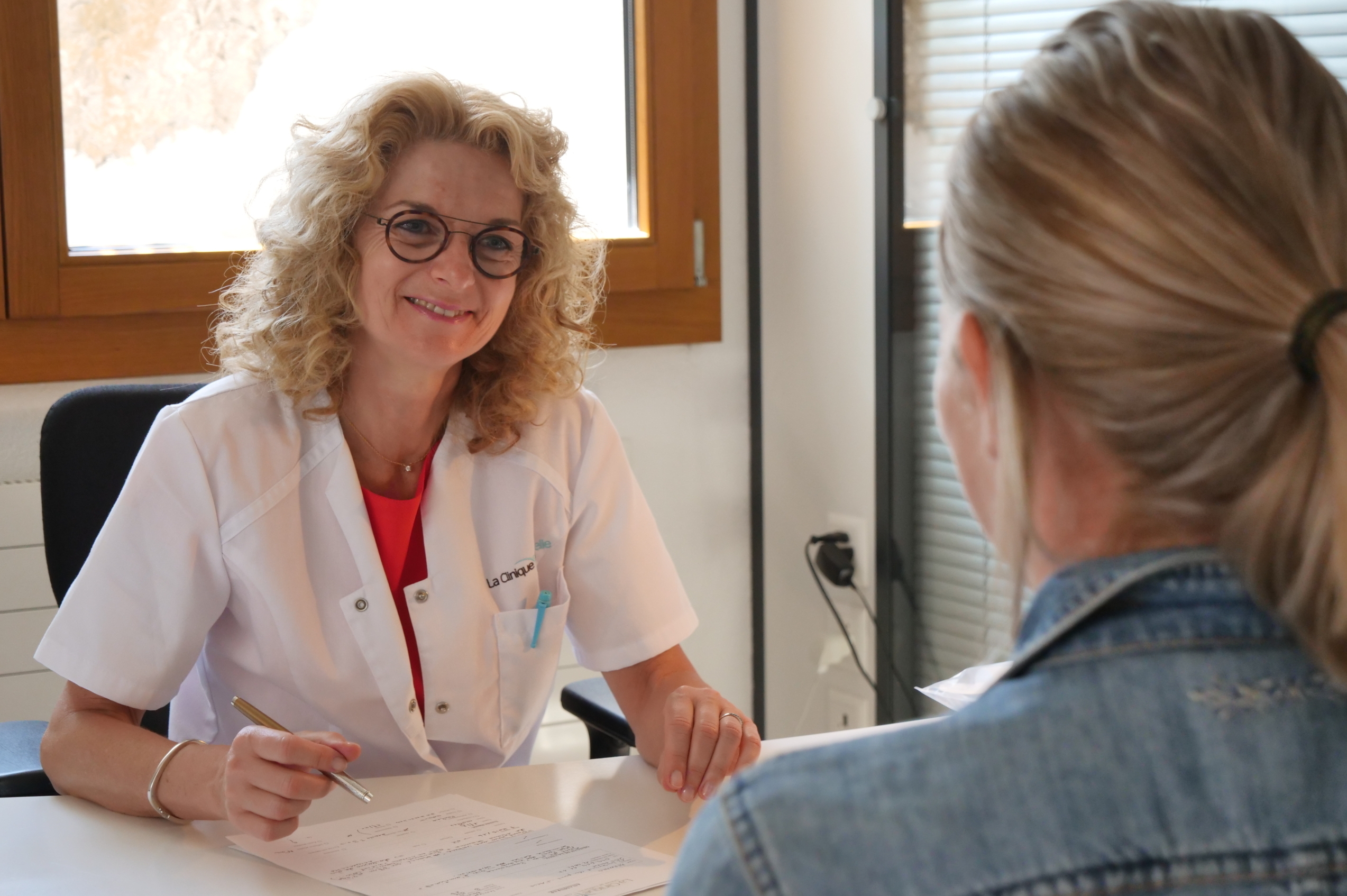
The sensation of heavy legs can manifest aslegs that feel heavy, tight, or tired, sometimes accompanied by swelling in the feet, ankles, or calves. These symptoms may be related to less efficient venous circulation, but edema can have many other causes.
At La Clinique Naturelle in Geneva, we offer complementary therapies that can help relieve discomfort in the legs and address certain circulatory or lymphatic issues, always as a supplement to conventional medicine when necessary.
Our Approach at Clinique Naturelle
Every situation is different. Two people facing a similar situation may experience it very differently and may not have the same needs.
That is why we always prioritize personalized care. Depending on your situation, one or more complementary therapies may be recommended, and, when appropriate, several therapists may work together to provide you with a comprehensive care plan, always in conjunction with conventional medicine.
Complementary therapies that may be part of your treatment plan:
1. Promote circulatory and lymphatic health
2. Addressing Everyday Factors
What Makes Our Support So Effective
FAQ – Heavy Legs and Edema
The approach depends primarily on the cause of the symptoms. When appropriate and in the absence of contraindications, certain complementary therapies may be recommended to improve leg comfort.
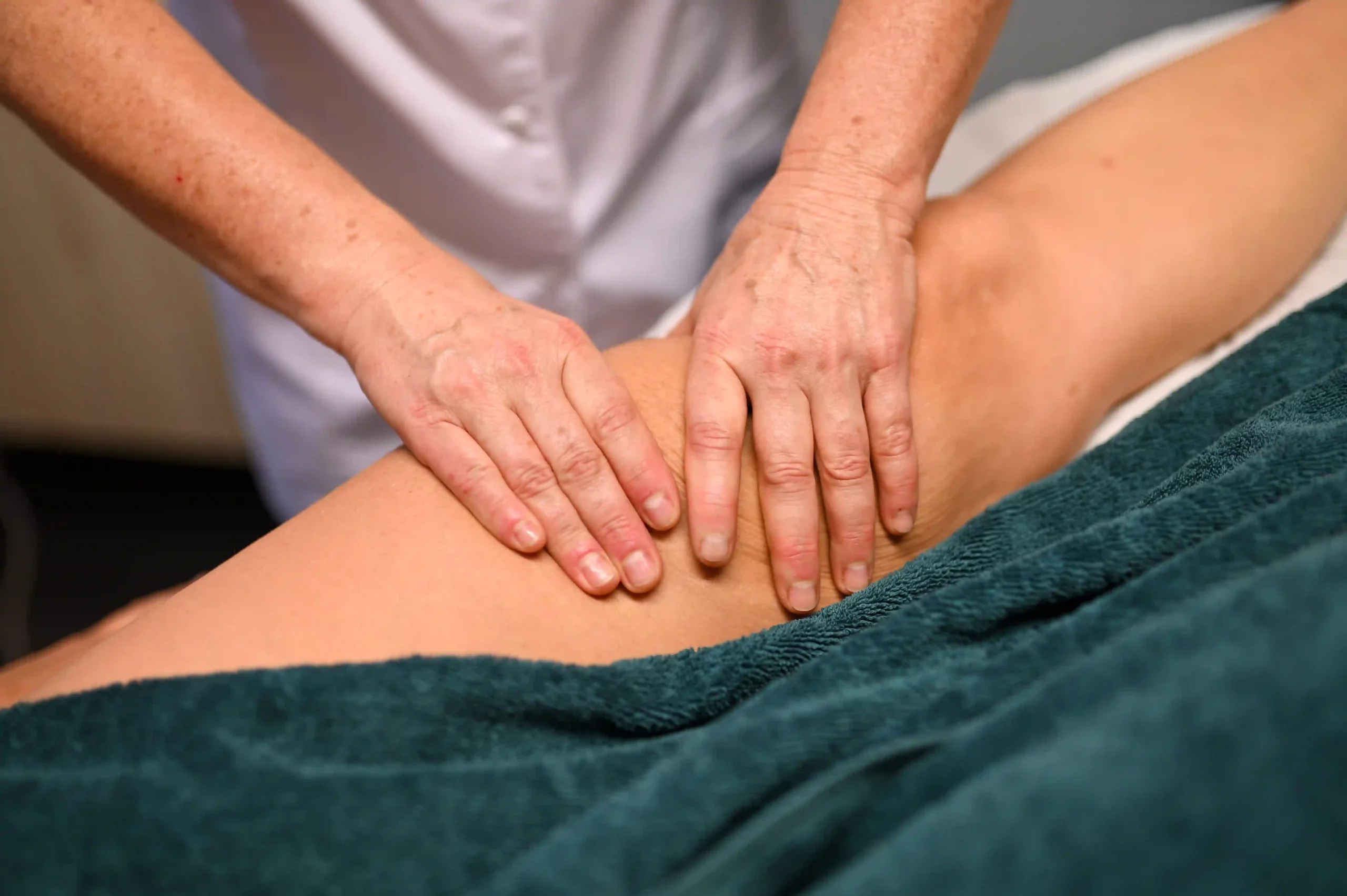
At La Clinique Naturelle, manual lymphatic drainage may be recommended in certain situations. A naturopathic approach can also help address certain factors related to lifestyle.
These treatments are not a substitute for the diagnosis or treatment of a venous disease or medically caused edema.
Walking engages the calf muscles, which help return blood to the heart. Exercising regularly and avoiding prolonged periods of inactivity can therefore help improve leg comfort.
Regular physical activity that is appropriate for your health condition can also be beneficial.
Medical compression can be used to treat certain venous conditions and help reduce swelling and discomfort.
However, the type of stockings and the level of compression should be tailored to each situation. It is best to consult a doctor or healthcare professional.
Sudden swelling in one leg, especially when accompanied by pain, warmth, or redness, requires prompt medical evaluation, particularly to rule out deep vein thrombosis.
If you experience sudden shortness of breath, chest pain, dizziness, or difficulty breathing, you need urgent medical attention.
It is recommended to seek medical advice when symptoms appear for the first time without an obvious cause, persist, worsen, or are accompanied by significant swelling, pain, skin changes, or prominent varicose veins.
Sudden or unusual swelling requires special attention, especially when it affects only one leg.
Heat causes blood vessels to dilate. In some people, this can reduce the efficiency of venous return and lead to a feeling of heaviness or swelling in the legs and ankles.
Getting regular exercise, avoiding prolonged periods of inactivity, and limiting exposure to intense heat can help keep your legs feeling comfortable.
Pregnancy can contribute to a feeling of heaviness in the legs and swelling, due in part to hormonal and circulatory changes.
However, any significant, sudden, or unusual swelling during pregnancy should be reported to your doctor or midwife.
When heavy legs are caused by poor venous circulation, the sensation may worsen as the day goes on. Standing or sitting for long periods of time can cause blood to pool in the lower limbs. Heat can also make this sensation worse.
If symptoms become frequent, worsen, or are accompanied by persistent swelling or significant varicose veins, it is recommended that you seek medical advice.
Heavy legs refer to a sensation of heaviness or fatigue in the lower limbs.
Edema is actual swelling of the tissues caused by a buildup of fluid. There are many causes of edema, and they are not necessarily related to the veins.
The term “water retention” is commonly used, but it does not identify the cause of the swelling.

Sources and Information
Sources and Medical Information
The information on this page is provided for informational purposes only and is not a substitute for medical advice.
Sources consulted:
- Health Insurance (Ameli) – Heavy Legs: Symptoms, Causes, and Contributing Factors
- Health Insurance (Ameli) – Heavy Legs: What to Do and When to See a Doctor?
- MSD Manual – Chronic Venous Insufficiency and Post-Thrombotic Syndrome
- MSD Manual – Edema
Last update to this page: August 19, 2026
Further information
Educational articles written by our therapists to help you better understand this topic and answer the most frequently asked questions:
Are the sessions covered by supplemental insurance?
Sessions may be partially reimbursed by certain supplemental insurance plans. However, coverage depends on your policy, the type of therapy you receive, and the therapist you choose.
Before your first appointment, we recommend that you contact your insurance provider directly and provide them with the following information:
- the therapist's name;
- the therapy in question.
The therapists at La Clinique Naturelle hold professional certifications that vary depending on their specialty, including accreditation from theASCA and/or the RME. However, these accreditations do not automatically guarantee reimbursement for sessions: only your insurance provider can confirm the exact terms of your coverage.
Do you have a question?
OR