Find more peace of mind, confidence, and resources to better handle everyday situations.
Sophrology at the Clinique Naturelle
✔ La sophrologie est une méthode psycho-corporelle associant des exercices de respiration, de relaxation, des mouvements doux et des visualisations guidées.
✔ Personalized support to help you better manage stress, embrace your emotions, build your confidence, or prepare for an important event.
✔ Two sophrologists with complementary approaches— Célia Lobo, ASCA-certified, and Florence Suter, ASCA- and RME-certified—to provide support tailored to your needs.
✔ An approach aimed at developing simple, reusable tools for everyday use, to complement medical or psychological care when necessary.
Ready to find more peace of mind in your daily life?


Why practice sophrology?
Persistent stress, difficulty managing emotions, lack of confidence, sleep disturbances, preparing for an exam, or going through a period of change… These situations can have a significant impact on personal well-being, concentration, and quality of life.
Sophrology offers breathing, relaxation, movement, and visualization exercises to help individuals better recognize their tension, tap into their inner resources, and gradually regain a sense of calm.
In particular, it can be considered for:
- better manage stress and tension;
- accept and manage one's emotions;
- build confidence and self-esteem;
- help promote relaxation before bedtime when sleep is disrupted by stress;
- prepare for an exam, an interview, a competition, or a public speaking event;
- provide support during pregnancy and help prepare for childbirth;
- navigate a period of change or a difficult life situation with greater peace of mind;
- develop concentration, creativity, and personal resources;
- to better cope with certain chronic pains or difficulties, as a complement to medical care.
The support is tailored to your situation, your needs, and the goal you’ve set with the sophrologist. It does not promise that a symptom will disappear; rather, its primary aim is to provide you with practical tools that you can gradually incorporate into your daily life.
What is sophrology?
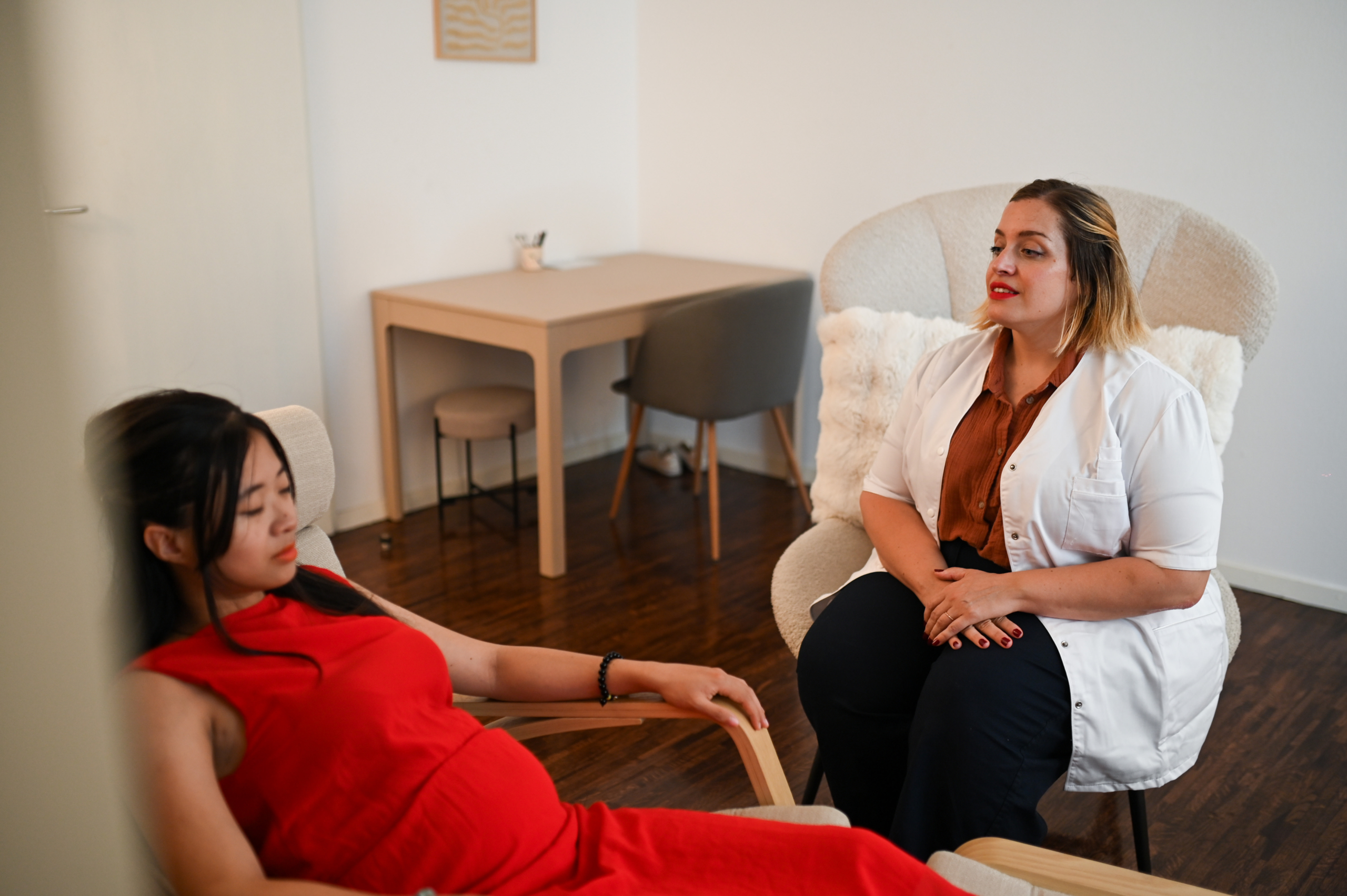
Sophrology is a mind-body method that integrates the body, breathing, and mindfulness.
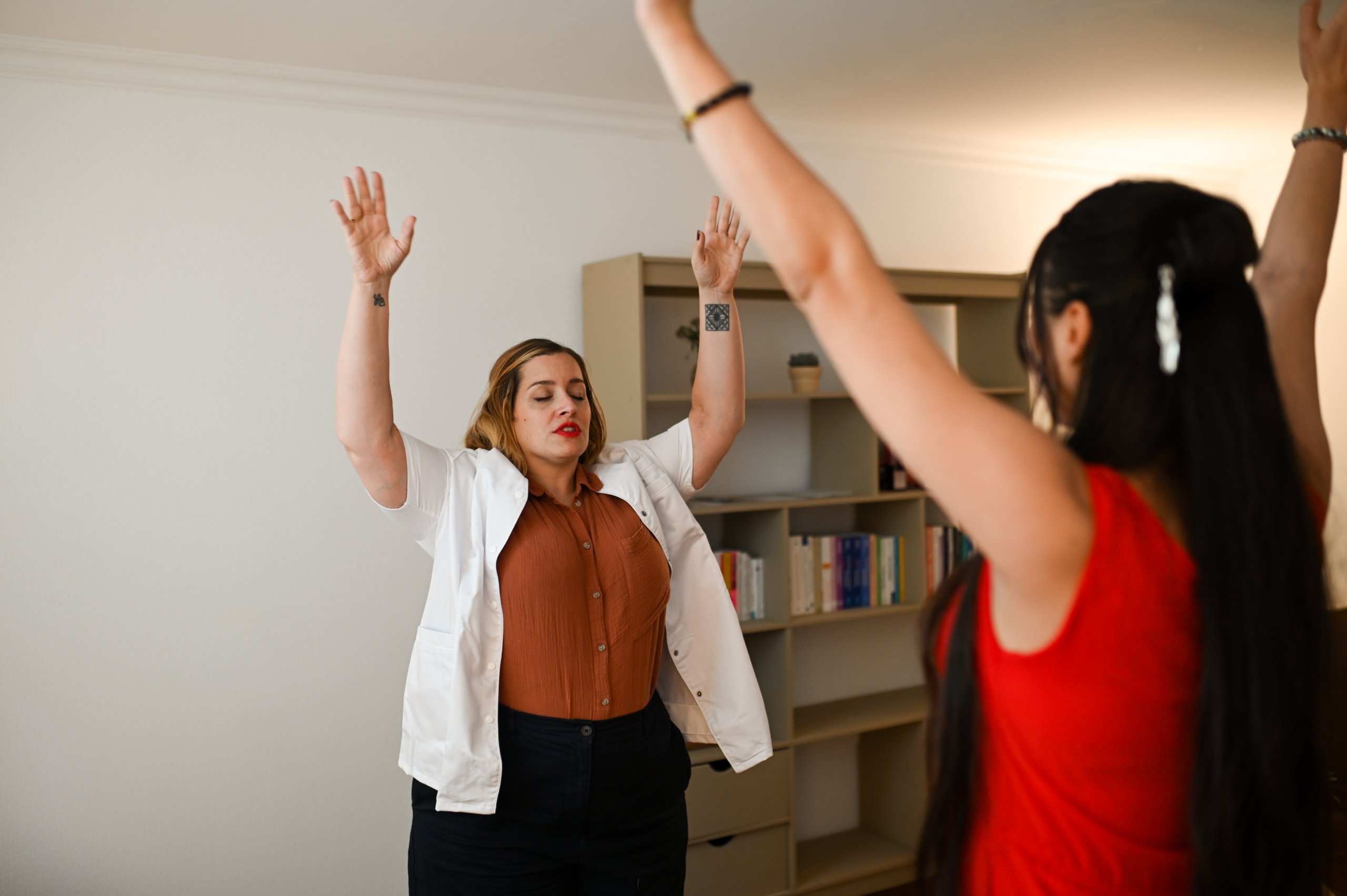
A session may include:
- controlled breathing exercises;
- gentle body movements, known as dynamic relaxation;
- a focus on bodily sensations;
- a guided relaxation session;
- visualization and mental preparation exercises;
- a time to share thoughts and feelings experienced during the practice.
The person remains conscious, free to move as they wish, and actively participates in the session. They can adjust or stop an exercise at any time.
The techniques suggested are chosen based on the specific goal being addressed. They can then be practiced between sessions to help integrate them and gradually develop greater independence.
What benefits can be expected from sophrology?
Sophrology can address a wide range of needs depending on a person’s situation, age, and goals. It is not intended to treat a medical condition, but rather to provide tools that enable individuals to better manage certain challenges, tap into their own resources, and gradually gain greater independence.
The effects experienced vary from person to person and depend, in particular, on the specific issue being addressed, the frequency of sessions, and personal practice between appointments.











How do you choose between sophrology, hypnosis, life coaching, and the MOSAIC method?
Sophrology is particularly well-suited if you want to learn breathing, relaxation, and visualization exercises that you can use on your own to better manage stress, emotions, and sleep, or to prepare for an event.
Le coaching de vie est davantage orienté vers la définition d’un objectif, l’identification des freins et la mise en place d’actions concrètes. Célia Lobo et Florence Suter peuvent associer sophrologie et coaching selon vos besoins.
Hypnosis offers a more immersive experience, based on a state of focused attention and guided by the therapist.
The MOSAIC method, inspired by certain principles of EMDR, uses, among other things, alternating bilateral stimulation to mobilize a person’s resources when facing an emotional challenge. Florence Suter may combine sophrology, hypnosis, or the MOSAIC method when appropriate.
No single approach is consistently better than another. The choice depends on your goals, preferences, and circumstances. An initial consultation with Célia or Florence will help determine the most appropriate support for you.
What makes our sophrology support at La Clinique Naturelle so effective?
Your treatment at a glance


Rates
| Session | Duration | Rates |
|---|---|---|
| First session | 1h30 | CHF 170 |
| Follow-up session | 1h | CHF 150 |
| 5-Session Pass* | 5 x 1 hour | CHF 700 |
| 10-Session Pass* | 10 x 1 hour | CHF 1300 |
*Our subscriptions are valid for 1 year
Are the sessions covered by supplemental insurance?
Some supplemental insurance plans may cover part of the cost of sessions. However, coverage depends on your policy, the type of therapy you receive, and the therapist you choose.
Before your first appointment, we recommend that you contact your insurance provider directly and provide them with the following information:
- the therapist's name;
- the therapy in question.
The therapists at La Clinique Naturelle hold professional accreditations that vary depending on their specialty, including accreditation fromASCA and/or RME. However, these accreditations do not automatically guarantee reimbursement for sessions: only your insurance provider can confirm the exact terms of your coverage.
Do you have a question?
OR
Further information
Sources and Medical Information
The information on this page is provided for informational purposes only and is not a substitute for medical advice.
- World Health Organization (WHO) – Questions and Answers on Stress
- Geneva University Hospitals (HUG) – How Can You Better Manage Your Stress?
- National Center for Complementary and Integrative Health – Relaxation Techniques: What You Need to Know
- PubMed – Systematic Review of Slow Breathing Techniques Before Bedtime and During Sleep
- Thérapie MOSAIC, Dr. Stéphanie Khalfa, neuroscientifique et psychologue
Last update to this page: August 13, 2026
Nos articles
Educational articles written by our therapists to help you better understand this topic and answer the most frequently asked questions: